Selling a home that needs significant repairs can feel overwhelming. Structural damage, outdated systems, roof leaks, or foundation cracks often scare away traditional buyers. But you don’t have to invest thousands in renovations to move forward. Many homeowners successfully sell houses as is without completing costly repairs.
If your goal is to avoid delays, reduce stress, and move on quickly, this step-by-step guide will walk you through the process.
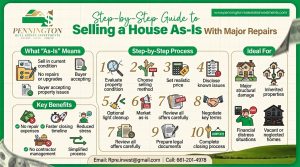
What Does It Mean to Sell As-Is?
When you sell a house as is, you’re telling buyers that you won’t make repairs before closing. The property is sold in its current condition, and the buyer accepts responsibility for improvements after purchase.
This approach is common in situations such as:
- Financial hardship
- Inherited properties
- Major structural damage
- Fire or water damage
- Vacant or distressed homes
An as is home sale shifts repair responsibility away from the seller, but disclosure requirements still apply.
Step 1: Assess the Property’s Condition
Before you sell a house as is, understand what you’re working with.
Consider Getting a Pre-Listing Inspection
While not required, an inspection helps you:
- Identify major structural issues
- Understand repair costs
- Avoid surprises during negotiations
- Price the property realistically
Common major repair categories include roofing, plumbing, electrical systems, HVAC, and structural damage.
If you’re selling a house with foundation issues, knowing the scope of the problem will help you evaluate offers confidently.
Step 2: Decide Your Selling Strategy
There are multiple ways to sell a house as is, even with serious damage.
Option 1: List on the Open Market
You can list traditionally and market the home as-is. However:
- Financing may fall through
- Buyers may request price reductions
- Inspections can cause delays
Option 2: Work With Direct Buyers
Many homeowners choose cash home buyers because they specialize in distressed properties.
This route may help you:
- Sell house fast
- Sell the house quickly
- Sell the house without repairs
- Avoid staging and showings
If your property has extensive damage, investors often provide more flexible options.
Step 3: Price the Home Realistically
Pricing is critical when you sell house as is. Overpricing a damaged property can leave it on the market, while underpricing may leave money on the table.
How to Determine Value
Factors to consider:
- Comparable sales in your area
- Estimated repair costs
- Market demand
- Location desirability
Here’s a simplified pricing comparison:
| Scenario | Estimated Market Value | Repair Costs | Expected Sale Price |
| Fully Renovated | $300,000 | $0 | $300,000 |
| Needs Major Repairs | $300,000 | $60,000 | $210,000–$240,000 |
Buyers calculate risk and renovation expenses into their offers. Understanding this formula helps you evaluate bids fairly.
Step 4: Prepare Required Disclosures
Even when you sell a house as is, you must legally disclose known issues. Transparency protects you from future liability.
Disclose:
- Structural problems
- Water damage
- Mold issues
- Electrical hazards
- Past repairs
Failure to disclose can lead to lawsuits after closing. Honesty builds trust and speeds negotiations.
Step 5: Decide If You’ll Clean or Clear the Property
You are not required to fully renovate, but minor cleanup can improve offers.
Some sellers choose to:
- Remove trash
- Clear debris
- Perform basic yard maintenance
However, if the home is severely cluttered, you can still sell house as is. Many investors even specialize in properties where owners need to sell hoarder house situations without cleanup.
Step 6: Market the Property Correctly
Marketing strategy impacts your timeline.
When Listing Publicly
Be clear in the description that the property is being sold as-is. Highlight:
- Investment potential
- Location advantages
- Large lot size
- Structural features
When Selling Directly
If you prefer a faster process, working with buyers offering distressed property acquisition services may eliminate the need for showings entirely.
This path often works best when you want certainty over maximum exposure.
Step 7: Evaluate Offers Carefully
When offers arrive, look beyond just the price.
Important factors include
- Proof of funds
- Inspection contingencies
- Closing timeline
- Repair demands
- Earnest money deposit
Sometimes, a slightly lower offer from a reliable buyer is better than a higher offer tied to financing.
If your goal is to sell a house as is without surprises, prioritize certainty.
Step 8: Understand the Benefits and Trade-Offs
Choosing to sell the house as is comes with both advantages and limitations.
Benefits
- No renovation expenses
- Faster transactions
- Less stress
- No contractor coordination
- Ideal for vacant properties
This is especially helpful if you need to sell vacant house properties that are costing you monthly expenses.
Trade-Offs
- Lower sale price
- Smaller buyer pool
- Negotiation flexibility may be limited
If speed and convenience outweigh maximizing price, this option makes sense.
Step 9: Negotiate Smartly
Even in an as is home sale, negotiation is common.
You can negotiate:
- Closing date
- Occupancy timeline
- Included appliances
- Earnest money amount
If a buyer requests additional price reductions after inspection, evaluate whether their concerns are legitimate or leverage tactics.
Being informed helps you sell damaged house properties with confidence.
Step 10: Close Efficiently
Once you accept an offer, closing can move quickly, especially with cash buyers.
To prepare:
- Gather title documents
- Resolve liens
- Review closing disclosures
- Confirm move-out timeline
Many sellers who choose to sell their house as is appreciate the streamlined process compared to traditional transactions.
Who Benefits Most From Selling As-Is?
This strategy is ideal for homeowners facing:
- Financial distress
- Foreclosure risk
- Inherited unwanted property
- Structural or foundation damage
- Severe water or fire damage
- Properties needing full renovation
If your home requires a major investment and you prefer not to manage contractors, this approach offers relief.
Comparing Traditional Sale vs As-Is Sale
| Feature | Traditional Sale | As-Is Sale |
| Repair Requirement | Often required | None |
| Timeline | 30–90+ days | Often 7–30 days |
| Buyer Financing | Common | Often cash |
| Inspection Negotiations | Frequent | Limited |
| Stress Level | Higher | Lower |
Many homeowners exploring fast home-selling solutions find that selling as-is reduces uncertainty.
Final Verdict
Major repairs don’t have to prevent you from moving forward. Whether you’re dealing with structural damage, foundation problems, or extensive deferred maintenance, you can still sell the house as is successfully.
The key steps include understanding your property’s condition, pricing realistically, disclosing honestly, and choosing the right selling method. While the final sale price may be lower than that of a fully renovated home, you save time, money, and stress by avoiding major repairs.
For homeowners facing complex property challenges, selling as-is provides flexibility and control. Instead of investing heavily in a home you no longer want or can afford, you can move on with clarity and financial certainty. If you’re looking for a straightforward process, Pennington Real Estate Investments offers professional support tailored to homeowners needing to sell their house as is. Their experience in handling complex properties ensures a smoother transition without unnecessary delays.
Reach out to Rpre.invest@gmail.com or call 661-201-4978 today to explore your options and take the next step with confidence.
FAQs
1. Can I sell the house as is without making any repairs?
Yes. You are not required to fix issues, but you must disclose known problems.
2. Will I get less money if I sell the house as is?
Typically, yes, since buyers factor repair costs into their offers.
3. How quickly can I close?
Cash transactions can close in as little as one to three weeks.
4. Can I sell the house as is with severe structural damage?
Yes. Many investors purchase properties with major structural or foundation issues.
5. Is selling as-is legally safe?
Yes, as long as you provide full disclosures and work with reputable professionals.