If you’re trying to sell house with code violations in California, you’re not alone. Thousands of homeowners face unpermitted additions, safety issues, or city citations that make traditional sales difficult. The good news? You still have options, even if your property has serious compliance problems.
California has strict building and safety codes. When violations pile up, they can delay closings, scare off buyers, and reduce your home’s value. But with the right strategy, you can move forward confidently and legally.
Understanding Code Violations in California
Code violations happen when a property doesn’t meet state or local building regulations. These may involve structural changes, electrical systems, plumbing, roofing, or zoning issues. Many homeowners discover violations when they attempt to refinance or list their home.
If you plan to sell house with code violations, it’s important to understand the type and severity of the issue. Some violations are minor paperwork problems, while others involve health and safety hazards that must be addressed quickly.
Common Types of Violations
- Unpermitted room additions
- Garage conversions without approval
- Faulty electrical wiring
- Plumbing not up to code
- Foundation or structural damage
- Mold, pest infestation, or water damage
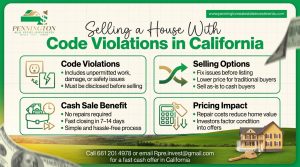
When selling a house with code violations, disclosure is legally required in California. Failing to inform buyers can result in lawsuits or canceled contracts.
Can You Sell a Home With Unresolved Violations?
Yes, you can legally sell house with code violations in California. However, the method you choose will determine how smooth the process is.
Traditional buyers using mortgage financing often require repairs before closing. Lenders typically won’t approve loans for homes with significant safety issues. This creates delays and added expenses for sellers.
Your Main Selling Options
- Fix the violations before listing
- Offer repair credits to buyers
- Lower the asking price
- Work with cash home buyers
- Pursue a distressed sale
If repairs are expensive, many owners choose to sell a house with code violation problems as-is rather than investing more money.
The True Cost of Fixing Violations
Before deciding how to proceed, compare repair costs against potential return. In California, construction and permit costs are higher than the national average.
If you want to sell house with code violations, you may need to:
- Hire licensed contractors
- Obtain retroactive permits
- Schedule city inspections
- Pay fines or penalties
- Correct structural deficiencies
In some cases, repair costs exceed $50,000, depending on the scope of work. For homeowners facing financial hardship, foreclosure, or a lien on their house, making those repairs may not be realistic.
Selling As-Is to Cash Buyers
One of the fastest ways to sell house with code violations is by working with investors who specialize in problem properties. Unlike traditional buyers, cash house buyers don’t rely on bank financing, which means fewer contingencies.
These buyers purchase homes in their current condition, including:
- Properties with open permits
- Homes with city citations
- Uninhabitable houses
- Major structural damage
Professional cash home buyers evaluate the properties’ after-repair value and make offers based on renovation costs and market trends.
Benefits of Selling to Investors
- No repair costs
- No agent commissions
- Faster closings (often 7–14 days)
- No lender-required fixes
- Reduced paperwork stress
Many homeowners seeking fast home-selling solutions find that investors simplify what feels like an overwhelming situation.
Pricing a Home With Code Violations
Setting the right price is crucial when you sell house with code violations. Overpricing will drive buyers away, while underpricing may cost you thousands.
Below is a simplified comparison:
Pricing Comparison Table
| Condition of Property | Traditional Market Value | Estimated Repair Costs | Realistic As-Is Price |
| Minor Violations | $500,000 | $10,000 | $465,000–$480,000 |
| Moderate Issues | $500,000 | $30,000 | $420,000–$450,000 |
| Major Structural | $500,000 | $75,000+ | $350,000–$400,000 |
How Investors Calculate Offers
Investors typically use the After Repair Value (ARV) formula:
ARV – Repair Costs – Holding Costs = Offer Price
If you need to sell a house with code violation challenges quickly, understanding this formula helps set realistic expectations.
Legal Disclosures and Compliance
California law requires sellers to disclose known material defects. When selling a house with code violations, transparency protects you from future legal claims.
You must complete:
- Transfer Disclosure Statement (TDS)
- Seller Property Questionnaire (SPQ)
- Local city violation notices
If your property qualifies as a distressed property, additional disclosures may apply.
Ignoring required disclosures can delay or derail your transaction. Always consult a real estate professional or attorney if you’re unsure.
When a Distressed Sale Makes Sense
A distressed property sale may be your best option if:
- You’re behind on mortgage payments
- The home has major structural damage
- Repairs exceed your budget
- The city has issued compliance deadlines
- You inherited a problematic property
Owners dealing with distressed property acquisition services often prioritize speed and certainty over maximizing price. In these situations, working with experienced cash house buyers can eliminate months of uncertainty.
If time is critical, choosing to sell house with code violations through a direct buyer may prevent foreclosure or additional penalties.
How the Process Works With Cash Buyers
When working with professional investors, the steps are simple:
- Request a property evaluation
- Schedule a brief inspection
- Receive a no-obligation offer
- Choose your closing date
- Close at a local title company
Many cash home buyers cover escrow and title fees, reducing your out-of-pocket costs. This approach works especially well if the property has city liens, safety violations, or unresolved permit issues.
Homeowners who need to sell house with code violations quickly often close in under two weeks.
Tax and Financial Considerations
Before completing a distressed property sale, consider:
- Capital gains taxes
- Outstanding utility bills
- HOA penalties
- Code enforcement fines
- Mortgage payoff balances
If there’s a lien on house due to unpaid repairs or city fines, it must be cleared at closing. Investors typically coordinate with title companies to ensure proper resolution.
Financial clarity ensures that when you sell house with code violations, you avoid surprises at the closing table.
Should You Repair or Sell As-Is?
Ask yourself:
- Do I have the funds for repairs?
- How long can I wait to sell?
- Am I comfortable managing contractors?
- Are fines increasing monthly?
If repairs will take months and add stress, it may be smarter to sell house with code violations as-is to a qualified buyer.
On the other hand, if violations are minor and inexpensive, correcting them could increase your net proceeds.
Final Thoughts on Selling a Non-Compliant Property
Choosing the right strategy depends on your financial situation, timeline, and tolerance for risk. While traditional listings work for some, others benefit from direct sales to investors specializing in distressed property transactions.
If you need guidance on how to sell house with code violations, Pennington Real Estate Investments can help. We provide fair, no-obligation offers and close on your timeline. Call us at 661-201-4978 or email Rpre.invest@gmail.com to discuss your property and explore your options today.
Frequently Asked Questions (FAQs)
1. Can I legally sell a home with open code violations in California?
Yes. You can sell with unresolved violations, but you must fully disclose them to the buyer.
2. Will a bank finance a property with major violations?
Most lenders will not approve loans for homes with significant health or safety issues.
3. Do I have to fix unpermitted additions before selling?
Not necessarily. Many investors purchase homes with unpermitted work as-is.
4. How fast can a cash buyer close on a non-compliant property?
Closings often happen within 7–14 days, depending on title and lien clearance.
5. What if I can’t afford to pay city fines?
Fines or liens are typically resolved during escrow using proceeds from the sale.